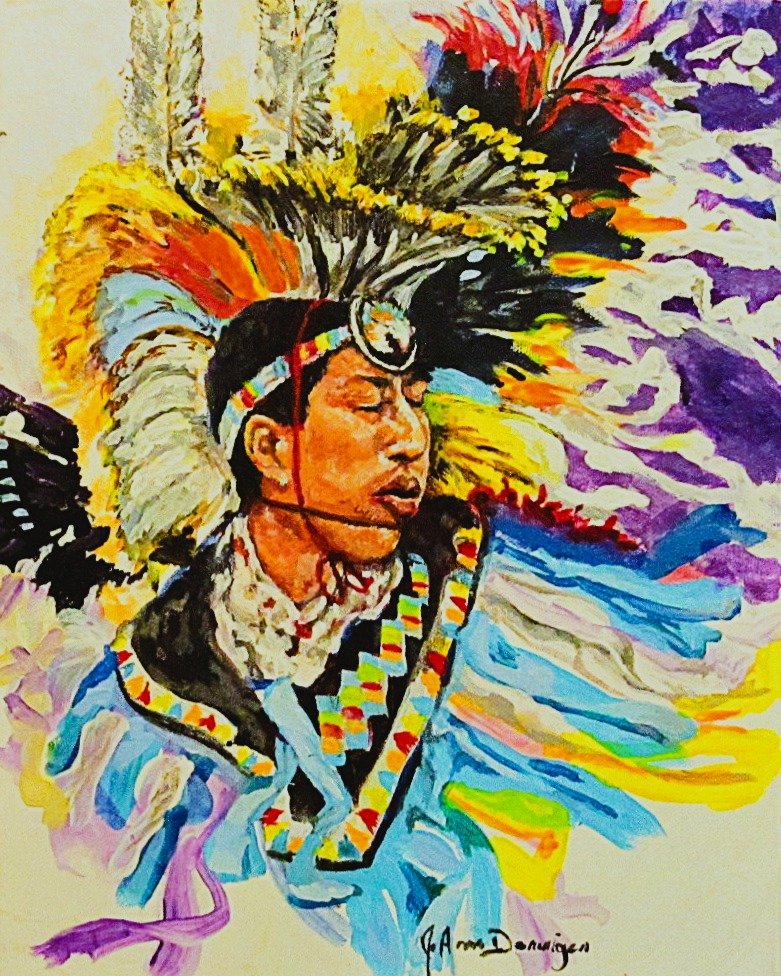
Ceremonial dances were vital to Native American life and spirituality, serving as key expressions of community identity, tradition, and sacred belief. After Europeans confined tribes to reservations, many of these dances were outlawed or discouraged by authorities. In response, some tribes later presented “Wild West” shows and public performances for visitors as a way to earn income and preserve elements of culture. The Fancy Dance — a flashy, faster, and more theatrical evolution of the traditional war dance, complete with bright, elaborate regalia — grew especially popular and became a prominent feature at public gatherings and powwows.
Ceremonial dances were vital to Native American life and spirituality, serving as key expressions of community identity, tradition, and sacred belief. After Europeans confined tribes to reservations, many of these dances were outlawed or discouraged by authorities. In response, some tribes later presented “Wild West” shows and public performances for visitors as a way to earn income and preserve elements of culture. The Fancy Dance — a flashy, faster, and more theatrical evolution of the traditional war dance, complete with bright, elaborate regalia — grew especially popular and became a prominent feature at public gatherings and powwows.